Logo Édition Originale
  • About us
  • Contact
  • Flag en
    • Icone favoris
    • Connexion
    • Icone panier

Literature
LiteratureFirst EditionsSigned Books, Presentation CopiesIllustrated BooksForeign LiteratureNovels, Short Stories and TalesPoetryTheaterMemoirs, Biographies and EssaysErotica
Antique Books (1455-1820)
Antique Books (1455-1820)First EditionsLiteraturePhilosophyArtHistoryScienceReligionTravelIllustrated Books
Fine Arts
Fine ArtsFirst EditionsSigned Books, Presentation CopiesPainting & DrawingSculpturePhotographyCinemaTheaterMusic & DanceArchitecture & UrbanismDesign & FurnitureFashion
History
HistoryFirst EditionsSigned Books, Presentation CopiesPrehistory & AntiquityMiddle AgesRenaissance & Modern TimesFrench Revolution & EmpireFrom the Restoration to the CommuneFin de Siècle & Belle EpoqueWorld War IThe Interwar PeriodWorld War IIContemporary EraThroughout the Ages
Travel & Exploration
Travel & ExplorationFirst EditionsSigned Books, Presentation CopiesEuropeAmericasMiddle East and Arab WorldSub-Saharan AfricaAsiaOceaniaAcross the World
Science, Medicine & Technical Innovations
Science, Medicine & Technical InnovationsFirst EditionsSigned Books, Presentation CopiesMedicinePhysical Sciences & ChemistryNatural SciencesGeography & AstronomyLogic and MathematicsTechniques & Crafts
Social Science
Social ScienceFirst EditionsSigned Books, Presentation CopiesSociology & AnthropologyPhilosophyPsychoanalysis & Psychology Law & JurisprudenceEconomics & PoliticsLinguistics
Religion & Occult
Religion & OccultFirst EditionsSigned Books, Presentation CopiesJudaicaChristianityIslamSpiritualityMythology & PaganismWitchcraft & DemonologyOccult & Spiritism
Social History
Social HistoryFirst EditionsSigned Books, Presentation CopiesAnarchism & UtopiaSocialism & CommunismSyndicalism & Social AdvocacyParis CommuneTotalitarianism
Literary and Artistic Periodicals
Literary and Artistic PeriodicalsLiterary and Art PeriodicalsPre-first EditionsSymbolism & Decadent Dadaism & SurrealismAvant-gardeArt & PoetrySatirical MagazinesAntiquarian Newspaper IssuesIllustrated periodicals
French Regional Literature
French Regional LiteratureNord, Picardy, NormandyAlsace & LorraineParis & Île de FranceBrittany & Loire Centre, Auvergne, LimousinLyonnais, Dauphiné, AlpsBurgundy, Franche-Comté, ChampagneSud-Ouest & LanguedocCharentes & AquitaineProvence, Côte d'Azur, CorsicaAcross France
Lifestyles
LifestylesFirst EditionsSigned Books, Presentation CopiesWine & GastronomyHunting, Fishing & NatureCircus, Magic & IllusionSports & GamesCaricatureNobility & Heraldry & GenealogyBibliography & Book History
Signed Books, Presentation Copies
LiteratureFine ArtsHistoryTravel & ExplorationScience, Medicine & Technical InnovationsSocial ScienceReligion & OccultSocial HistoryLifestyles
Autograph Letters & Manuscripts
Autograph Letters & ManuscriptsLiterary ManuscriptsArtist's ManuscriptsHistorical ManuscriptsScientific manuscriptsSigned photographs
Artworks
Artworks16th-18th Century Prints19th Century Prints & Lithographs 20th Century Prints Vintage PostersPaintings & SculpturesDrawings, Inks & WatercolorsPhotographsDescription of Egypt (1809)Antique Maps
Illustrated Books
Illustrated Books16th-17th Century Illustrated Books 18th Century Illustrated BooksRomantic Illustrated Books (1800-1860)Fin-de-Siècle Illustrated Books (1860-1900)Modern Illustrated BooksModern and Contemporary Illustrated BooksArtist’s Books
Fine Arts
Fine ArtsFirst EditionsSigned Books, Presentation CopiesPainting & DrawingSculpturePhotographyCinemaTheaterMusic & DanceArchitecture & UrbanismDesign & FurnitureFashion
Heavyweight Summer Beach ReadsHeavyweight Summer Beach Reads
Heavyweight Summer Beach Reads

Ravenous readers, set aside short tales and order à la carte from our selection of literary heavyweights: epics, sagas, odysseys, sweeping frescoes, monumental novels, cycles, tetralogies…

Masterpieces to be savoured without restraint—right down to the very marrow of their substance!

Short Stories & TalesShort Stories & Tales
Short Stories & Tales

Instead of searching for lost time, try finding it again with a short story: they are often the finest fare, and at the tale end, these brief accounts prove joys beyond compare. So let the simple heart of Bartleby transform the balls of tallow into the Venus of Ille…

The Ancient AuthorsThe Ancient Authors
The Ancient Authors

From Attic classics to apothecary's Latin. come feast at the banquet of the ancients. On the menu at Aesop's tables: Roman let us scroll, Gaelic reads,  Ovid's spoil, Chinese feud.

Foreign LiteratureForeign Literature
Foreign Literature

Pardon my non-french! You are all forgiven, you strange strangers who delight us with your torrents of tongue, your lexicons of legend, your diamonds of idiom. Let us relish the ripeness of your rhetoric, the wild, unheard-of wonders you weave, told in the tongue of Shakespeare, Goethe, Li Po, Dante, Cervantes, Khayyam, Sappho - or in the translations of Gide, Nerval, Judith Gauthier, Rivarol, Oudin, Toussaint, or Renée Vivien!

Our Great ModernsOur Great Moderns
Our Great Moderns

A traversal through the works of those who have been writing, imagining, and creating since the late twentieth century. This selection brings together pieces that mirror the shifts of an era — literary gestures, singular voices, new perspectives. Each book and object has been chosen to capture, through its material presence, the living imprint of our contemporaries.

Browse our Selections
You wish to be assisted by our bookseller to find a gift?
Our team will send you a personalized selection within approximately 24 hours.
I prefer to be contacted by
Explore
Advanced search
  • Home
  • Browse collection
  • Latest acquisitions
Browse
All CollectionsCatalogues
Resources
  • Authors
  • Publishers
  • Bookbinders
Services
Sell to usTailored GuidanceSet an alert
  • Media
  • About Us
  • Where To Find Us
  • Contact
Change Language
Flag en
Logo Édition Originale
Flag en
Connexion
Icone panier
Rare Books
Autographs
Art
Gifts
Sell to usNews

Librairie Le Feu Follet•31 rue Henri Barbusse, 75005 Paris•+33 1 56 08 08 85•Monday - Friday, 11am to 7pm
Edition-Originale.com
Univers
Media / Investigations

June 6, 2016

Mysticism, art & love or the romantic soul of Franz Liszt


Under any apparent humility Franciscan Franz Liszt hid a lifelong attraction to sensuality, which removed him from religion.
He yet find at the end of his life by sharing paradoxically with the love of his life.

Mysticism, art & love
or the romantic soul of Franz Liszt

In 1877, Liszt and summarize his life: "After I painfully deprived for thirty years, from 1830 to 1860, the sacrament of penance, it is with full conviction that resorting to it again I could tell my confessor [...] "my life has been one long distraction from the feeling of love." I add singularly led by music - the divine and satanic art at a time - more than any other it leads us into temptation. "

We find this mixture of faith, passion for music and feeling, essential components of the romantic soul of Liszt, played in the copy of the poem of St. Francis of Antoine de Segur Liszt sent the Countess Fleury aka Adele of Prunarède:
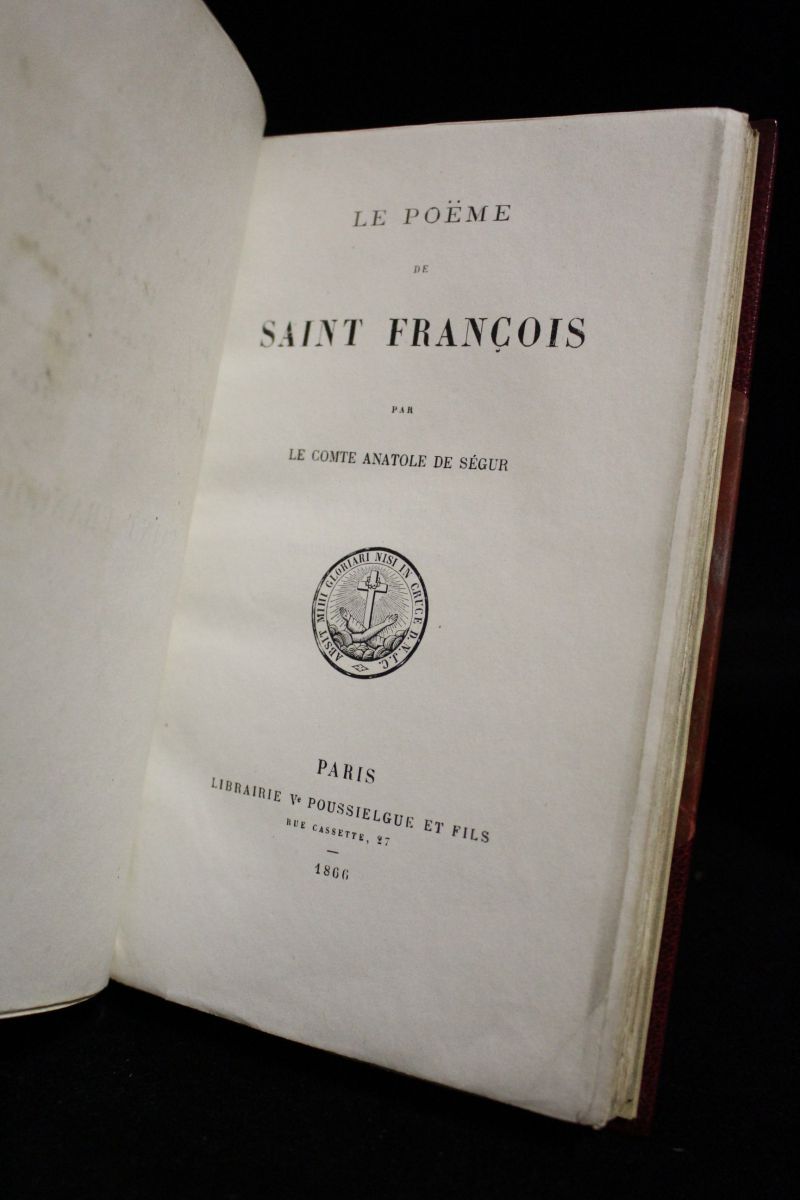
Autograph of Franz Liszt


"Madame la Comtesse Fleury - respectful homage of a Third Order Franciscan poor."

This pious dedication written on the work of a third party, under his apparent humility all Franciscan testifies actually a deep complicity with this woman whose sensuality away from the religion and he found thirty-five more later in this common faith.

Founding figure of osmosis between man and nature, St. Francis of Assisi seduced early Romantics in search of medieval icon. Chateaubriand devotes beautiful pages of the second volume desMémoires beyond the grave, Hugo, Lamartine, Vigny are inspired Liszt and who joined the Franciscan order in 1865 composed several works dedicated to him whose Cantico di Francesco del sol Assisi and St. Francis preaching to the birds, both contemporary of the work of Anatole de Segur Liszt offers to the Countess of Fleury.

The Poem of St. Francis is also one of the first books on the "Poverello" who knew several repudiation of centuries before the Renaissance romance. Liszt, very attentive to education and artistic representations of St. Francis, will retain his library several important books on the Franciscans, a copy of the life of Saint autographed by Segur to "Abbe Liszt" in "tribute grateful admiration "(the work was referenced in Liszt's library after his death).
Combining spirituality and poetry, hagiography this verse could seduce the composer poetic and religious Harmonies just ordained cleric of Friars Minor.
Yet this ex-dono stakes of a "poor Franciscan" to a countess herself devout seclusion revives an older and sulphurous fire consumed the youth of the author of Reminiscences of Robert the Devil and desMéphisto-waltzes.

The "Comtesse de Fleury" is actually "Duchess" of Fleury but Liszt especially enjoyed the title of Countess since, when the meeting in January 1831 in a Parisian Salon, Adele Josephine Quarré Chelers then the Countess Adèle La Prunarède.

After a major mystical crisis, Liszt, aged nineteen years, so knows his first love. If "we know little about [t] he various love affairs [...] a name clearly stand this series of love affairs: that of the Countess Adèle of Prunarède" (cf. Serge Gut, inCorrespondance Franz Liszt and Marie Agoult).
This "heady person" fifteen years his senior and was the first real connection of the young composer. "Just six months after leaving his contemplative lethargy, Liszt plunged in the delights and torments of sensual passion and feverish" (op. Cit.) That will be interrupted in 1832 by the encounter with Mary of Agoult.
Although Liszt had spent several months with Adele in the castle of Marlioz Haute-Savoie, this relationship is not well known biographers and historians.
Yet the importance of this lover is evidenced by the strong jealousy it will inspire Mary Agoult throughout his relationship with Liszt, as evidenced by his correspondence and his diary.

From the early years, the letters of Liszt and Marie d'Agoult are crossed by this menacing ghost.
Fears of Marie d'Agoult, who suffers from the past gallant Liszt are doing particularly on Adèle (the only one being mentioned by only his first name). Despite the care of Mary for not to show her feelings, the Liszt answers are explicit: "Miss Boscary wife Miramon, I'm happy. Adèle in Geneva is crushed with grief. That too is good. ".
The answer of Marie d'Agoult is completely mutilated passage about Adele: "Tell me about Adele. What can be so still make him suffer. You know that I love "(Following is cut as often for too delicate passages).
In the letters the couple between 1833 and 1834 references to that Adele are also frequent enigmatic: "It is in your power to do me a great service; my poor and miserable destiny is in your hands [...] it is not you or me it is but Adele "(Liszt Mary, August 1833).
In May 1834, responding to a specific request: "Tell me what you wrote to Adele," Liszt to Marie d'Agoult confirms his fears about his affection Adele:

"I thought better not meet him now. [...] The need to see, to talk about the depths of the soul torments me sometimes ... but rarely. ".
Soon after, a new Mary jealous rage forced Liszt to come back again on his painful breakup with Adele:
"Fight time, anguish and torment of solitary - when I was breaking, destroyed it, violently anéantissais love Adele. That's when I wrote: I am and I would not being - I must suffer, suffer alone ... "
From letter to letter, he tells Mary his guilty regrets: "I have been a coward, miserable coward [Liszt emphasizes two words] to Adele." Then he becomes cruel, "What have I to say ... and what I would tell him, did she understand? "Sometimes sarcastic," Wolf told me a little scandalous story of Mr. Ginestous and Adele. There for unwinding humbly endured whip by Adele [...] This amused me. ". Some letters even seem cynical, like here in about another conquest spurned: "I heard shouting me the bottom of his heart:" Love me, save me, "as Adele once. ".
Adele seems to disappear a time of Liszt's life and Agoult but in 1837 when their settlement in Italy, its presence in the country concerned immediately Mary (she had last year already noted in his diary the "Pilgrimage of Adele Rome "):
"Ms. Pictet would she in which city of Italy is time it is [...] of Mrs. Prunarède? "(Letter to A. Pictet, October 1837)
Since then and until their breakup in 1839, the proximity of this rival will be a constant threat to the couple:
"Madame de la Prunarède here with Cadore. She is separated from her husband and is shared between lovers and confessors. "(Letter to Louis Ronchaux, Rome March 18, 1839)
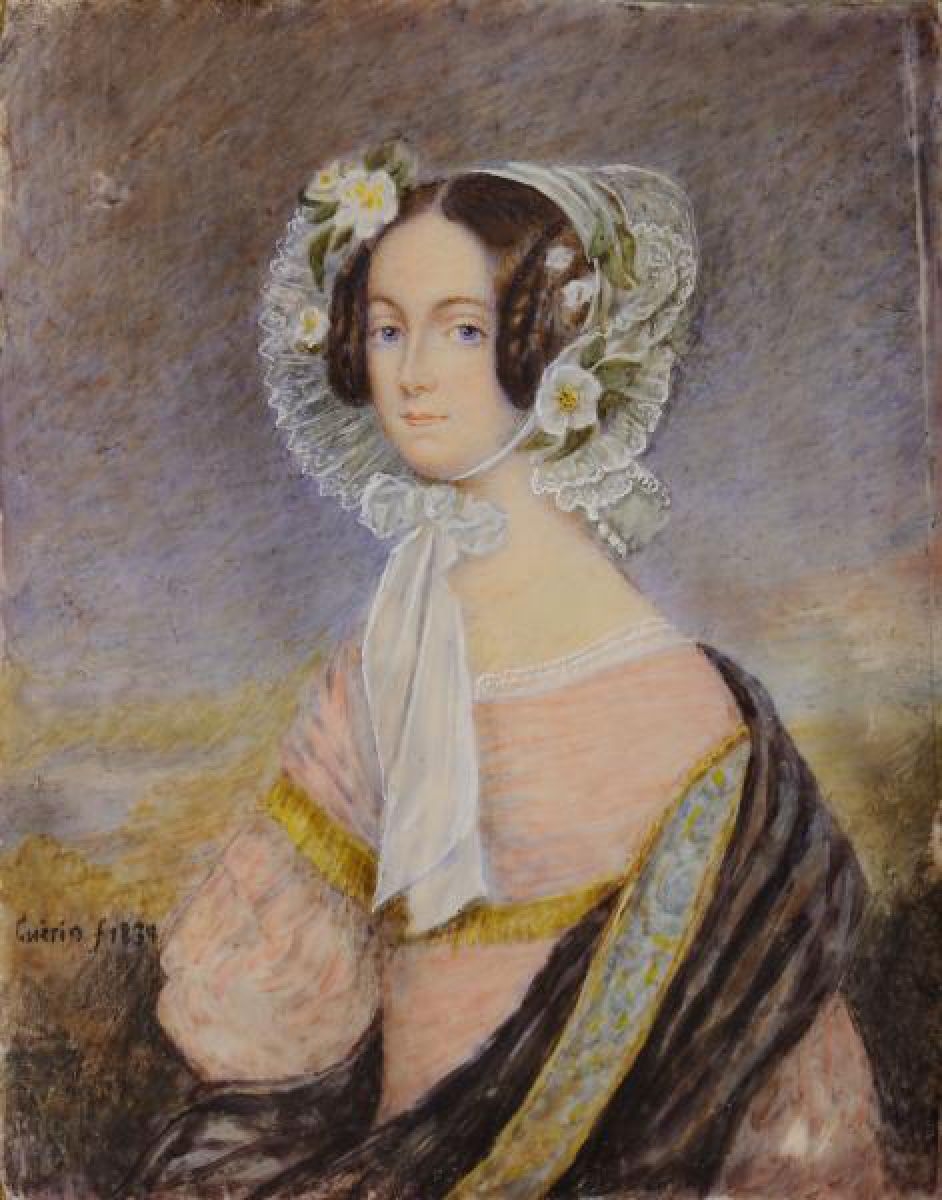
Adèle of Prunarède, called Countess of Fleury

During their joint visit to Italy, Marie Adèle avoids cross, but his correspondence reveals that Liszt, in his chagrin, the more assiduously frequented. So this bitter letter to Adele in July 1839
"As you said yesterday Franz, you are highly regarded in the world. The same world that looks, do not consider myself at all, and what is more appalling is that I do not care me in any way. [...] This account you gained is the result of caution that you should not compromise on the striking impact of my unusual sincerity. the truth! we also say that you convert sinners, you walk victoriously in the ways of salvation, carrying with you the subjugated souls. Maybe I would suffer, like others, the irresistible eloquence of your beautiful blue eyes, I'm afraid not yet. "

Soon after, the newspaper clearly reveals the fear that this first love of Liszt still provokes Marie:
"Adele has [...]. I receive in my room. My heart was horribly. I'm back at her. She is horribly changed. Its size is distorted, his squinting eyes, swollen features, his sallow complexion. It's too fake. [...] Franz thinks big. "(Journal, July 1839 inMarie D'Agoult, General Correspondence Volume II)

But even more than the beauty of Adele, what frightens Mary is its mysticism. Indeed, the former mistress of Liszt follows the same course as his lover of youth, and having known him as "a rather tumultuous love life, she spent her last years in a deep piety. "(Op. Cit. P. 562)

 
Investigations
Investigations
Everything you’ve always wanted to know — and also what you think you already know, what you didn’t realize you couldn’t ignore, what you assumed no one knew, along with a few other erudite secrets. The Feu Follet investigations are like your curiosity: sharp and spirited.

Categories
EditorialInvestigationsEventsCataloguesPressCollector's GuidesGlossary of Book TermsAlbumThe EnigmaLe Feu Follet's LetterAll

A question, a comment?
Let's talk

Receive our articles in the Feu Follet's Letter
Subscribe
More articles
September 4, 2026
Aragon's Earliest Known Poem: The Birth of a Poet Soon to be Buried Beneath the Shells of the Great War
One is not born Aragon, one becomes him. Through the trauma of the first World War, the upheaval of Dadaism and the enthusiasm of Surrealism, through communist conviction, through Resistance to oppression, through love… Before Elsa's gaze, before the Affiches rouges, the comrades, the artistic revolutions (even before the shell that would bury him in the trenches) Aragon is already Aragon, from the very first poem, feverishly written in pencil on a schoolboy's page and given to his friend "Anicet"…
July 3, 2026
First edition copy of Hugo's political manifesto offered to his grandchildren Jeanne and Georges
"What my son has written, he has written, I repeat, because I inspired it in him from childhood, because at the same time as he is my son by blood, he is my son in spirit, because he wants to continue his father's legacy".
June 19, 2026
Brilliant Story for a Gem of a Book
In the library of the celebrated jeweller Alexandre Reza lay a literary diamond: Chien Blanc. Its presentation inscription by Romain Gary evoking the 'precious stones' of their shared youth surely made it the crowning gem of his collection. As a true artist of the stone, Reza then set this sublime jewel with one final emerald: an original drawing of one of his own creations.
Subscribe to the Le Feu
Follet Newsletter, a singular note
on the ever-changing world of books.
Meticulous and passionate investigations, a selection of new acquisitions, and preview our catalogues in advance.
Services
Expert Guidance
We buy
Valuation
Gift Ideas
Concierge
Create an alert
Orders
Order
Payment
Delivery
Pick Up at Bookshop
Manage your Orders
Return & Refund
Unconditional Guarantee
Certificate of Authenticity
About
Le Feu Follet
History
Our Team
Engagements
Labels
Press
Contact
Resources
Authors
Publishers
Bookbinders
Places of publication
Lexicon
Legal
Terms of Sale
General Terms and Conditions
Privacy Policy & Cookies
Dessin façade librairie Barbusse trait
+33 1 56 08 08 85
[email protected]
Contact us
Logo
Logo
Logo
Dessin façade librairie Barbusse trait
Librairie Le Feu Follet
31 rue Henri Barbusse
75005 Paris (FRANCE)
Monday - Friday from 11 am to 7 pm
Dessin façade librairie Barbusse trait
Galerie Le 121
121 bd Saint-Michel
75005 Paris (FRANCE)
By appointment during exhibitions & events
Langue
Français version
Flag en
SIRET 412 079 873 · © Librairie Le Feu Follet – Edition-Originale.com · All rights reserved
