



Free valuation of rare and antiquarian books by our experts Pascal Antoine (member of ILAB and Compagnie Nationale des Experts), Grégory Bacou, Benjamin Urien, and Adélaïde Carton.
Get a professional and free appraisal of your rare, antique and modern books, manuscripts, first editions and artworks from our expert booksellers.
Would you like an evaluation of a valuable book, to have antique books appraised or sold, to authenticate an author's or artist's autograph manuscript, or to know the value of a library, a collection or a unique artwork?
Submit photographs, a description or a list of your works to begin a free estimate. Or contact us and make an appointment with our experts at the Bookshop or at your home.
Key questions to ask when evaluating whether a book might be valuable:
Is it a first edition (the first time the text was published)?
Is it a numbered copy (part of a limited edition printed on deluxe paper)?
Is it illustrated with engravings by a renowned artist (and not merely reproductions)?
Does it bear evidence of distinguished provenance, such as an ex-libris or an armorial binding?
Has it been inscribed by the author?
Is the volume complete and well-preserved, noting that damaged copies or those in poor condition usually command little value?
Comparable copies may occasionally be found on the internet, yet it requires the eye of a specialist or informed collector to tell apart a genuinely prized edition from one that merely resembles it.
A request for appraisal is free of charge and entails no obligation on the part of the enquirer. No personal data is collected by edition-originale.com, and the bookshop undertakes never to contact enquirers once the appraisal is concluded.
Rare books are often difficult for a novice to identify. The bookseller’s expertise ensures that important historical documents and significant artistic works are neither overlooked nor damaged.
Conversely, the arrangement provides experts with a singular chance to identify rare items likely to attract the bookshop’s attention.
This service also reflects the bookshop’s ethos, demonstrating its commitment to the preservation of the written heritage through the dissemination of knowledge.
Incunabula (books printed before 1501)
Numbered first editions (deluxe paper) by celebrated authors
Armorial bindings and finely bound books
Books illustrated with original works by major artists
Manuscripts and autographs of literary, artistic, historical, or scientific figures.
Copies inscribed by the author or formerly owned by historically significant figures.
Extremely rare works on topics that were innovative at the time of publication (e.g., early books on aviation, photography…)
And many other works of distinction…
Cleaning with unsuitable products
Amateur restorations (tape, glue, mounted covers…). One should never attempt to restore a book before its evaluation by a professional.
Low-cost binding. It is always preferable to have a book appraised before undertaking any binding work.
Storage in damp or overly dry conditions. Books thrive in temperate environments; any excess will, sooner or later, cause deterioration.
Exposure to direct sunlight or moonlight. Bindings inevitably fade over time when subjected to the unmediated light of the heavens.
Forcibly opening books wide or displaying them spread open. From their very conception, books were intended to be handled with care, opened no more than 90°, and kept closed and shelved for preservation.
Author, title, and date, of course, but also the condition (note that a “good condition” for you may not be so for a collector… It is preferable to provide details such as worn corners, handwritten markings on pages, or a missing leaf). Should any information be lacking, do not hesitate to contact us for assistance.
N.B.: An incomplete series of books will rarely carry any value. Should you possess only volumes 1, 2, and 5 of a set, there is little point in submitting them…
The bibliographic account of a work is intricate, employing numerous specialised terms. An expert’s assessment is best informed by photographs showing the cover, interior, title page, and specific details including collation, illustrations, handwritten notes, and any defects.
For a substantial collection, you may provide a single photograph of the whole lot to give a general sense of the library’s quality, or submit a list without images. The expert may subsequently request photographs of particular items if required.
Any appraisal conducted at a distance, using supplied information and images, serves solely as a guide and represents an average valuation based on the material received. Our experts base their valuations on bibliographical specifics, bibliophilic particularities, international sales results, current market availability, their experience, and collectors’ expectations.
However, missing or incorrect information, misinterpretation, or an overlooked detail may lead to an inaccurate valuation. Remote valuations do not constitute an expert appraisal or authentication. Such assessments can only be conducted in person, following thorough examination of the submitted item.
Your request will be directed to the appropriate expert, who will examine the provided details to assess whether the submitted work may possess bibliophilic value. If the information is sufficient, they will respond promptly with a price range or by referring you to other professionals.
Our specialists will often request further details or additional photographs, and may even advise you to bring your volume(s) directly to the bookshop for a more thorough appraisal. For sizeable collections, our experts are able to travel, but a preliminary assessment – by telephone or email – is always required in order to gauge the scope of your library.
An appraisal may, where appropriate, be accompanied by a purchase offer should the work be of interest to the bookshop. Purchases are settled in full, by cheque, bank transfer, or cash in compliance with legal requirements, to adult vendors only, upon presentation of valid identification. A sales contract is prepared and signed by both parties.
When seeking to appraise a book in your possession, consulting online listings provides a useful initial indication of its rarity. However, for books of significant bibliophilic value, each copy is unique, and novices will find it difficult to make meaningful comparisons. You may, however, deduce from your findings that a title commanding a high price from some vendors deserves expert evaluation; a book abundant on the market suggests that supply outweighs demand; and the wide disparity of prices online is explained by bibliophilic nuances as well as by the activity of non-professional sellers who set unreasonable prices. The financial value of a rare book always rests on objective grounds, based as much on its historical and symbolic significance as on its scarcity.
Conversely, your volume may possess features that confer a higher value than copies found online—such as an authorial inscription, signed binding, manuscript corrections by the author, enrichment with watercolours and drawings, or the inclusion of an autograph letter.
Prices depend on numerous bibliophilic factors specific to each work, but above all on research and collectors’ expectations.
Our appraisal is complimentary and carries no obligation for either the enquirer or the bookshop. It does not constitute a firm offer of purchase, unless explicitly stated by our expert.
Our bookshop is a member of the International League of Antiquarian Booksellers (LILA–ILAB), the French Syndicate of Antiquarian and Modern Booksellers (SLAM), and the French National Company of Experts (CNE). Any purchase proposal made by our shop will only be final following an in-person appraisal.
How to have your books appraised?
The simplest and quickest way to obtain an appraisal is to send us detailed photographs of your rare book. Here are the elements to photograph first:
Title page (or final page, “colophon,” for incunabula)
Printer’s statement and copyright page (for books printed from the 19th century onward). Typically located just before the title page or immediately after the last page of text, it usually begins with “From this edition were printed…”
Binding and covers (ensure the book is shown from every angle)
General state (include images of all imperfections, interior and exterior).
From these photographs, the expert will be able to determine the condition of the copy.
Should the edition lack specific value – or lie beyond our field of expertise – our specialist will guide you towards suitable avenues for valuation and sale.
If your copy is likely to hold bibliophilic interest, the expert’s work begins:
Bibliographical identification
Verification of edition and printing details
Assessment of condition
Analysis of the copy’s specific features (binding, inscriptions, provenance…)
Estimation of rarity and significance (market, institutions, reputation, historical interest).
If sufficient elements for an appraisal are provided, the expert will communicate the initial conclusions of their assessment (based on the materials supplied and on the presumption that no other significant specificities exist).
This free evaluation of your book or manuscript will be presented as follows:
Price range – approximate value of a copy in comparable condition, absent other distinguishing features
Justification of the estimate – a brief explanation of the factors determining the value of the edition and of your particular copy
Advice on preservation or sale. Estimates are provided free of charge and do not constitute offers to purchase by the bookseller unless explicitly stated by the expert.
For any further information or clarification regarding the present appraisal, the expert is available by email or telephone.
Any estimate provided remotely is of informative value only. The authenticity and precise value of a work can only be determined in person. Accordingly, in the event of a proposal for acquisition by the bookshop, a request for a written appraisal, or a wish to confirm the authenticity of the work, it will be necessary to present the work for examination under the following conditions:
In-person submission:
Appointment with an expert at Le Feu Follet bookshop, 31 rue Henri Barbusse, 75005 Paris (free of charge)
OR: Travel by the experts (free of charge, by the bookshop’s arrangement only)
OR: Shipment of the work to be examined to Le Feu Follet via express carrier with insurance (free of charge, by the bookshop’s arrangement only)
Consultation and detailed examination of the submitted document:
Immediate appraisal or deposit (the time needed for evaluation may range from 15 minutes to 2 working days, depending on the characteristics of the piece or the nature of the request).
Authentication, definitive appraisal, acquisition:
A priced offer and immediate purchase with prompt payment by Le Feu Follet bookshop
Written appraisal stamped by CNE expert, Pascal Antoine. An official document for insurance, inheritance, or donation purposes (fee-based service, quotation on request).
The average response time is approximately two working days. Nevertheless, the duration of processing and examination of your works depends upon several criteria: the number of works and documents to be studied, the accuracy of the information supplied, the pertinence and quantity of photographs provided, the bibliographical complexity of the items, and, naturally, the availability of our experts. Therefore, replies may be issued within a few hours or take several days.
If you have not received a response within one week, we invite you to follow up or contact us by phone, as your message (or ours) may have been inadvertently sorted into a spam folder.
The information and photographs concerning the works submitted to us, as well as the valuations we provide, are entirely confidential and are never disclosed, not even for advertising or indexing purposes, as is common on many valuation websites. Your rare books and antiquarian documents are key components of your heritage, whose value may be affected by premature public disclosure (for example, an unpublished manuscript whose text is revealed online can no longer be valued as such). Accordingly, we only provide information on works that we have acquired, and never on their purchase price.
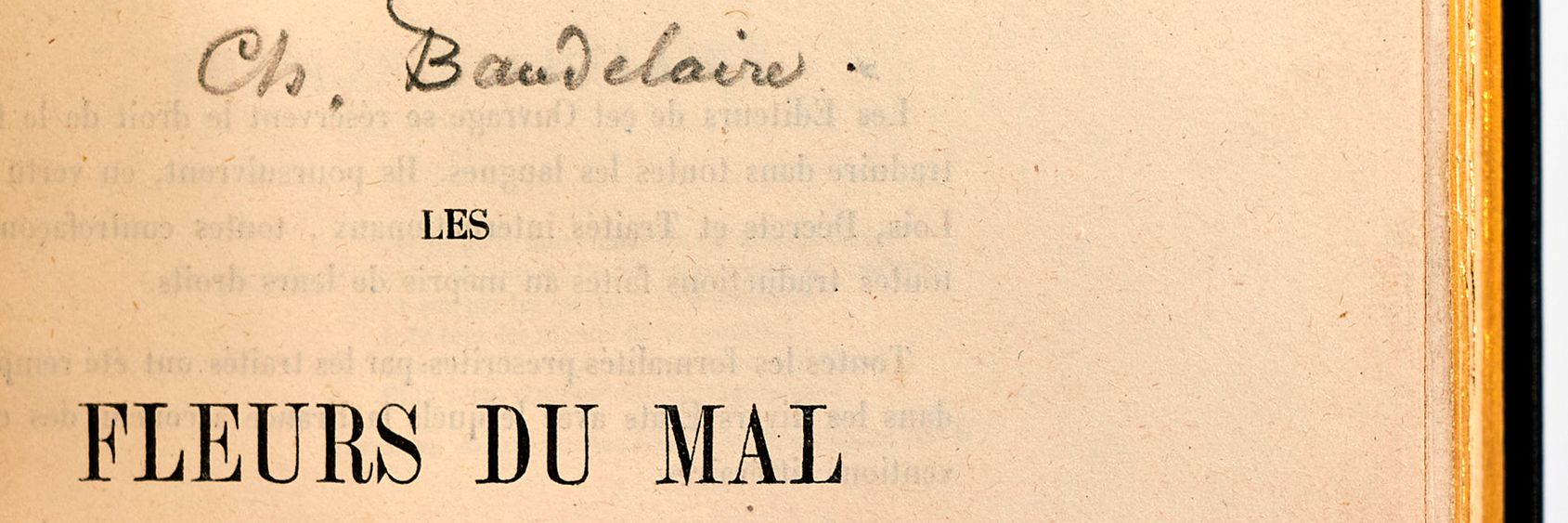
Each individual work presents unique characteristics that preclude comparison with other copies of the same edition. Thus, it is necessary to verify both the specific traits and the overall condition of a copy in order to perform a precise and thorough expert appraisal.
1. Authenticity: There are early 20th-century reproductions of the first edition that carry no intrinsic value. While a novice might be fooled, an expert will have no difficulty in distinguishing these reprints from a genuine first edition—though we have observed such a copy sold by a foreign peer, whom we duly notified of the error. (Warning: no reputable expert would ever consider purchasing a reprint, even at a low price; such offers warrant caution.)
2. Condition: Should the work be incomplete, defective, or torn, its value is ordinarily negligible. Lesser imperfections may nonetheless greatly impair its worth (such as foxing, wrinkled paper, repairs, or sunning).
3. The suppressed pieces: Part of the print run of the first edition of Les Fleurs du mal was truncated by court order, with several pages removed. Such copies hold only modest value, incomparable with those containing the complete suppressed pieces.
4. The printing: Several successive printings of the same edition display different characteristics. A first printing (with the typographical error “s’enhardissant”) is far more valuable than a later printing.
5. The covers: For most copies, the preservation of the original wrappers within the binding is a key factor in determining the value of Les Fleurs du mal. However, if the binding was executed contemporaneously, the original wrappers will naturally be absent without affecting the valuation. There are also several types of wrappers for this first edition, some earlier, others later.
6. The binding: The condition of the binding is crucial in evaluating Les Fleurs du mal, but the binder’s name is also a decisive factor. A copy bound by Lortic (the father) is far more valuable than most other bindings (even those by his son!). Indeed, Lortic was Baudelaire’s preferred binder, so a modest Lortic binding carries greater bibliophilic significance than an elaborate 20th-century binding.
7. Authorial corrections: Some copies bear autograph corrections by Baudelaire himself, while others were amended by unknown hands. The former represents a mark of added value, the latter a genuine detriment.
8. Author’s Dedication: A copy inscribed with an autograph note (i.e., in Baudelaire’s own hand) is among the most valuable items in French bibliophily. However, if any part of the dedication (such as the recipient’s name) has been erased, this constitutes an irreparable defect affecting the copy’s value.
9. Other specificities: Prestigious or historical provenance established by a bookplate, graphic enhancements by a renowned artist, the addition of period engravings, or a particular history of the copy are all specificities that can considerably affect its value. Other factors may also play a role, such as the size of the copy, bibliographical peculiarities not yet documented, or other unexpected features, even for our experts…
A first edition of Baudelaire’s Les Fleurs du Mal is a rare and highly valuable work, a major piece of bibliophily. Yet your particular first edition is a unique object, whose value may exceed that of others. Entrust it to us for valuation and receive a tailored appraisal to sell or insure your item.
Our certifications and labels:
Member SLAM (Syndicat national de la Librairie Ancienne et Moderne)
Member LILA-ILAB (Ligue Internationale de la Librairie Ancienne)
27 Years of experience (bookseller-expert since 1998)
Over 75,000 rare works appraised and catalogued on Edition-Originale.com
French and foreign literature
Sciences, medicine, and technical disciplines
History and travel accounts
Fine arts and artists’ manuscripts (including livres d’art)
Illustrated works
Lithographs, engravings, prints, paintings, drawings, ink pieces, etchings
Ancient and modern bindings, signed bindings
First and pre-first editions
Periodicals and press publications
Autograph inscriptions and personal dedications
Incunabula
Autograph letters and manuscripts of writers, artists, and scientists.
While collectors are often aware of the value of the libraries they have patiently assembled over the years, books are sometimes undervalued in estates, where assessments are usually focused on real estate and works of art. Yet a library, a collection, or even a single volume may at times be worth more than a work of art, an antique, or a property. What are the signs that should encourage you to have the antiquarian books inherited from your parents or relatives appraised?
A collector’s library (fine bindings, numbered editions, illustrated books, author inscriptions, plate books, armorial bindings, rare editions, manuscripts, etc.)
An artist’s collection (works of art, correspondence with fellow artists or friends, engravings, unfinished projects, personal notes)
A journalist’s archives (inscribed books, proofs, letters from writers or public figures, autograph manuscripts, original articles, photographs, etc.)
The documentation of a scientist or scholar (antiquarian and specialised books and journals, correspondence with peers, research papers, personal writings…)
Library of a great reader or discerning and passionate amateur (a wide variety of rare works on a subject, substantial collection of books in first edition, discerning choice of important authors or, conversely, unknown to the general public)
Holdings of a publisher, bookseller, gallery, printer or other cultural enterprise (all documentation, printed material…)
A substantial collection of books (in wrappers or bound) or manuscripts assembled by an individual over the years
A lot of antiquarian books, finely bound and in very good condition.
Any book with specific characteristics: numbered copy, book inscribed by the author, book with a fine binding, book illustrated by a great artist, incunabulum (book printed before 1501), books from the 16th, 17th, and 18th centuries…
Sales options:
Sale to a professional bookseller: should your book, work, or manuscript correspond to the collecting focus of Librairie Le Feu Follet, our expert will propose a price for purchase.
Payment: instant, by bank transfer, cheque, or cash, in compliance with legal requirements.
Price: fixed and final offer following in-person appraisal.
Fees: No charges apply. Expertise is free of charge; tax on valuable items (if applicable); any travel by the expert or shipment costs are covered by Librairie Le Feu Follet (see conditions).
Transparency: the selling price will be shown on our website Edition-Originale.com.
Appraisal: estimated value guaranteed by the purchase offer, which binds the expert.
Bibliographic details: comprehensive, with the expert highlighting the bibliophilic aspects that give the work its value, along with any additional particularities.
Respect for the work and its provenance: all works presented by our bookshop are accompanied by detailed notes highlighting their significance, while respecting the wishes of sellers and collectors.
Right of withdrawal: Any purchase from a private individual carries a 15-day right of withdrawal following the transaction. Librairie Le Feu Follet extends this right to all its acquisitions (including in-store purchases) upon simple request. (Practically, no restoration will be carried out on the item nor will it be offered for sale before the end of this period.)
CNE and SLAM Guarantee: Librairie Le Feu Follet is a member of the National Syndicate of Antiquarian Booksellers and the National Company of Experts, and is therefore obliged to adhere to the codes of ethics relating to appraisal and purchase.
Auction sales: you may offer your work at the auction house.
Payment: deferred up to six months, depending on the auction house, negotiable. This delay is mainly due to waiting for a sale with a theme relevant to the work, followed by settlement by the buyer.
Valuation: the expert’s appraisal is given without any guarantee of outcome. The sale price is determined by the auction. The final result may be higher or lower. A reserve price (the minimum bid below which the auctioneer will refuse the sale) can be negotiated, as can the seller’s commission (the buyer’s commission is not negotiable).
Fees: the auction house commission ranges from 40 to 55% (10–25% on the seller, 25–30% on the buyer). Additional costs (storage, cataloguing, tax on valuable items, etc.) may be charged to the seller.
Final price: Auction sales may encourage bidders to exceed the professional purchase price. On the other hand, a lack of genuine competition can lead to a price significantly lower than the true value. The auction room bears no responsibility for the gap between the estimate and the final hammer price.
Transparency: the seller is informed of the hammer price achieved by the auction house. The name or status of the final buyer (bookseller or private collector) is generally not disclosed.
Bibliographic information: the auction catalogue entry is usually written minimally. It is the buyer’s responsibility to examine the item before the sale to assess its significance and bid accordingly.
Expertise: it is preferable that this be carried out by a specialised expert, who may also handle the negotiation of the seller’s fees with the auction house.
Right of withdrawal: permitted up until the day of the sale. No right of withdrawal after adjudication.
Guarantee: major auction houses work with recognised rare book experts, or employ their own specialists. Like professional bookseller-experts, they owe a duty of advice to the seller.
Direct sale to a private buyer.
For books of lesser value, or with defects incompatible with the standards of professionals and discerning collectors. Peer-to-peer sales platforms such as eBay are alternatives to car boot sales and flea markets.
Consignment sale.
For outstanding works, booksellers can propose a sale on commission to ensure the seller obtains the best price while safeguarding the professional. Nonetheless, as bookselling demands patience, consignment should be planned for an extended period without guaranteed outcomes.
Our Service:
Guidance on the most suitable method of sale
Purchase offer at the best price if of interest to the bookshop
Otherwise, referral to other experts, booksellers, auctioneers, or sales platforms
Organisation of auction sales with expert appraisal, bibliographic notice, negotiation of fees, and advocacy for the seller’s interests to achieve the best possible outcome
Preparation of bibliographic entries for articles and catalogues relating to historical works or major collections.