



August 2, 2017
Baudelaire crepuscular: "The state of disgust in which I am makes me find everything even worse."
Attracted by the promise of a glorious reputation, Baudelaire went to Belgium in April 1864 for a few conferences and the hope of a fruitful encounter with the editors of Les Misérables, Lacroix and Verboeckhoven. The latter will not move, the conferences will be a failure, and Baudelaire will feed an enormous resentment against the "poor Belgium". Yet, despite the many solicitations of return, the poet will spend the rest of his days in this harsh country, leading a life of bohemian melancholy. Apart from a few short stays in Paris, Baudelaire, struck by a cerebral attack that left him hemiplegic, did not return to France until June 29, 1866, for a last year of silent agony in a nursing home.
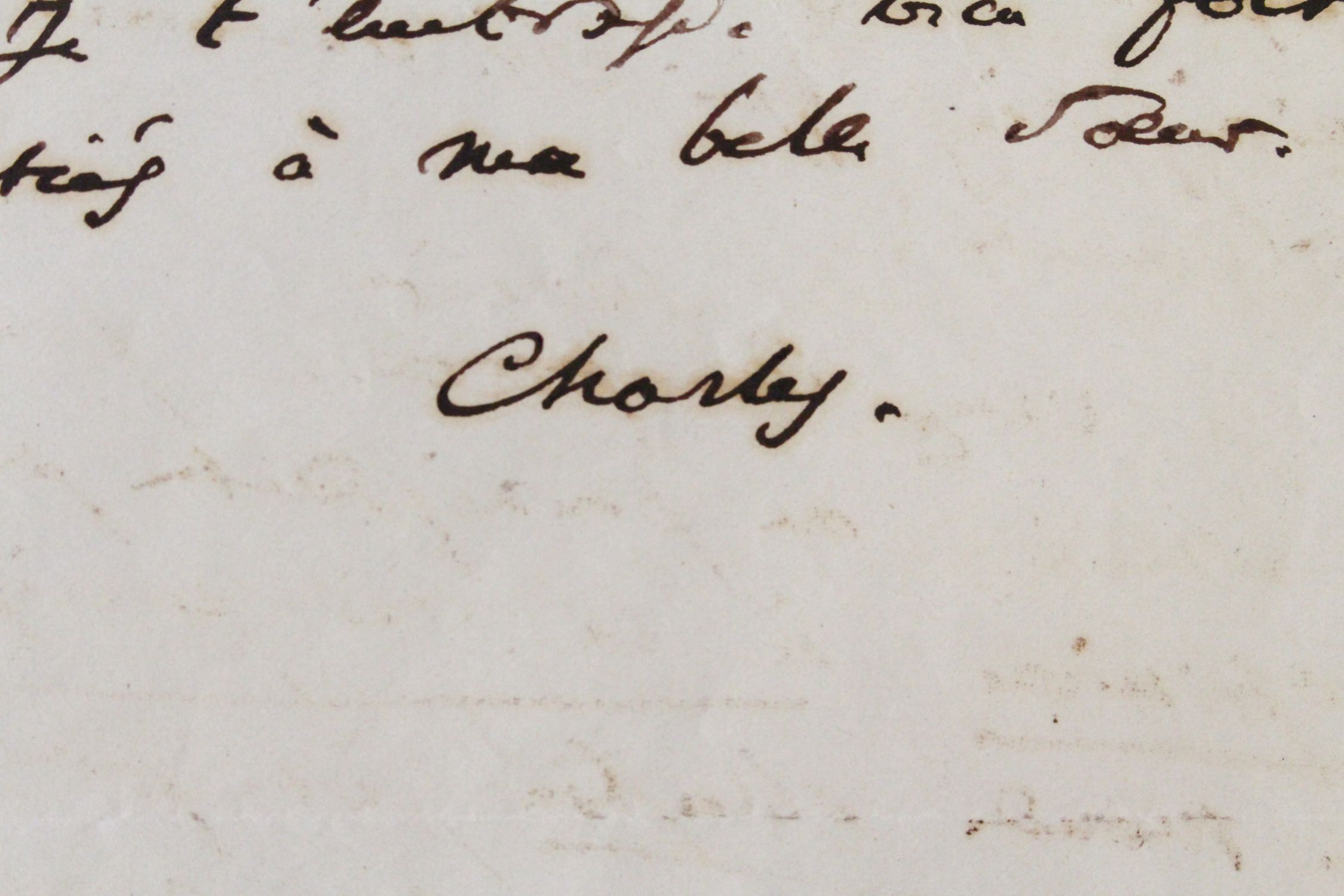
Written only a few months after his arrival in Brussels and his first disappointments, this letter reveals in filigree all the principles of the mysterious passionate hatred that will definitely retain the poet in Belgium.
During his last French years, exhausted by the Fleurs du Mal trial, humiliated by the refusal of his candidacy for the Academy, a literary orphan after the failure of Poulet-Malassis and a disinherited author by selling the rights of his translations to Michel Lévy , Baudelaire is particularly affected emotionally by the inevitable degradation of Jeanne Duval, her eternal love, while her passion for the President has dried up, whose poetic perfection has not withstood the prosaic of physical possession. Thus, on April 24, 1864, he decides to flee these "decomposed loves" of which he has not "kept the form and the divine essence."
Belgium, this very young country which seems to have been born of a French-speaking romantic revolution against the Dutch financial yoke, offers itself fantastically in the eyes of the poet as the place of a possible recognition of his own modernity. A blank page on which he wished to impress the power of his tongue by asserting his economic independence, the flat country was a mirror on which Baudelaire projected his powerful ideal, but which would more violently send back the spleen of his ultimate disappointments.
Published in the Revue de Paris of November 1917, amputated by the delicate paragraph on its cold enemas, this emblematic letter evokes all the poetic, literary, artistic and pamphleteer works of Baudelaire: first through the tutelary and reassuring figure of the publisher Fleurs du Mal, Poulet-Malassis: "If I did not stay so far away from him, I really think I would pay him a pension to eat at home. "; Then by the concrete evocation of the "venal value" of his aesthetic curiosities: "all those articles that I have so painfully written about painting and poetry". Baudelaire then confided to his mother the hopes of publishing his last translations of Poe which, to his great displeasure, "do not appear in the Opinion, the Parisian Life, the Illustrated World." Finally, he concludes on his Belgian Letters, which Jules Hetzel tells him that after negotiations with Le Figaro, "his letters are accepted with joy." However, Baudelaire points out, these are "to be published only when I return to France".
Leitmotiv of his Belgian correspondence, his constant return to France: "Decidedly, I think I will go to Paris on Thursday" and incessantly repulsed ("I postpone my trip to Paris until the end of the month" He seems to excite the ferocity of the poet against his new fellow-citizens, to whom he is pleased to spread himself the worst rumors concerning him (espionage, parricide, anthropophagy, pederasty and other licentious activities: "Exasperated To be always believed, I spread the rumor that I had killed my father, and that I had eaten it (...) and I was believed! I swam in dishonor like a fish in the sea, Water. "- Poor Belgium, In Complete Works, II p.855)
This eminently poetic attempt to explore the depths of despair by drinking hatred is perhaps even more luminous through the sharing of its gustatory disappointments with this "very dear mother", the only nourishing figure who, Offers him "more than he expected".
Putting it into perspective with some of the most beautiful pages of Les Fleurs du mal, this excessive attention to the miseries of his palace reveals more than an exercise in gastronomic criticism.
It is thus not innocent that Baudelaire begins his recriminations by an exhaustive rejection of all food to a notable exception: "Everything is bad except wine". The assertion is evidently not without echoing the "vegetable ambrosia," elixir consecrated in so many poems and especially companion of abjection that drowns the sublime crime of the poet: "No one can understand me. One of these stupid drunkards / Did he dream in his morbid nights / To make wine a shroud? ".
"The bread is bad." If wine is the incorruptible soul of the poet, the bread, here emphasized by the author, is his innocent and bruised flesh. "In bread and wine for his mouth / They mix ashes with impure sputum," as in Benediction, it is the poet-child who everywhere "in the hotel, the restaurant, the tavern "Suffers from the impossible elementary communion and thus offers his mother the spectacle of a still more symbolic misery.
Man, however, is always present, and his carnal desires are carpeted under the misery of his condition: "The meat is not bad by itself. It becomes bad by the way it is cooked. ". How, behind the prosaicism of this culinary judgment, does not recognize the most constant of the Baudelairian metaphors, crossing the poet's work - A carrion, To the one who is too gay, A martyr, Women damned ... - The female body transfigured by the Death?
"... The sun shone upon this decay,
As in order to cook it to a point,
And to return a hundredfold to the great Nature
Everything she had joined together. "
"Baudelaire does not wish for comfort, and his complaints are only the expression of the perfect correlation between his physical condition and this ultimate poetic experience.
For Belgium is, of course, not really involved, but it is only to her mother that Baudelaire can make the moving and rare avowal: "I must say, moreover, that the state of disgust in which I am made to find everything even worse. "
Indeed, all the violence he will unleash against these cursed brothers is only the echo of an earlier rancor which in 1863 gnawed at his "heart laid bare." Already, at the recriminations of his mother, discovering the notes of his son, Baudelaire replied on June 5: "Well! Yes, this book so much dreamed will be a book of grudges. (...) I will turn my real talent of impertinence against all France. I need revenge like a tired man needs a bath. "
The "cold enemies with laudanum" of Belgium will be the bath of the tired poet, who will find here the opportunity to fight by an exuberant anger, this existential "disgust". At the turn of a paragraph - the very one which was amputated by the French Revue - Baudelaire attributes it, without naming it, to syphilis: "What is unbearable in these affections of intestines and d Stomach, it is the physical weakness and the sadness of spirit that results ".
Madame Aupick's immediate anxiety as a result of these too abrupt confidences, prompts Baudelaire to lie to him now on his real state of health, which will nevertheless continue to deteriorate. Thus, in the following letter: "I have had the greatest misfortune to speak to you of my Belgian health, since it has moved you so much. (...) In general, I have excellent health (...) That I suffer from some small infirmities (...) what does it matter? This is the common lot. As to this disagreement, I repeat to you that I have seen other Frenchmen taken like me, and not being able to accustom myself to this ugly climate. (...) Besides, I have little time to stay. "
Superb autograph letter from the son to his mother revealing, in half words, the poetic reasons for his ultimate voluntary exile, mirror inverted from the first forced expedition of his youth to the archipelago of Mascareignes, the writer's only two voyages.
If the young man could not escape the distant Isle of Bourbon, the old poet would not dare to leave so near Belgium, and this melancholy letter augured a twilight in the North Sea as dark as the light of day, Initiatory crossing of the South Seas.
" Sunday morning. 14.
But, my dear mother, it is more than I expected. So there will be enough for the three objects. A thousand times thank you.
You speak of diet at your ease.
Everything is bad, except wine. The bread is bad. The meat is not bad by itself. It becomes bad by the way it is cooked. People who live at home live less harm. But the hotel, the restaurant, the English tavern, all this is bad. I must say, moreover, that the state of disgust in which I am makes me find everything even worse.
Malassis taught her cook to do some cooking. If I did not stay so far from him, I really think I would pay him a pension to eat at home.
I am going to put myself in cold enemas with laudanum.
What is unbearable in these affections of intestines and stomachs is the physical weakness and the sadness of mind which result from it.
Decidedly, I believe I shall go to Paris on Thursday, I will write to you either from Paris or from here on my return.
Must I really believe that all those articles I have so painfully written about painting and poetry have no venal value? When I think of all the garbage and all the nonsense that sell so easily!
I want to understand why my articles do not appear to the opinion, the Parisian life, the illustrated world, and why Parisian life did not send 400 francs to a man I had designated.
The person whom I had so impatiently expected from Paris has at last returned. She tells me that my letters are accepted with joy. "I never doubted it, but I am well advanced. "How much will each letter be paid?" Will the newspaper reserve to take only a few? Do you think it necessary to pay me beforehand, and not to publish until I have returned to France? - None of these issues have been addressed.
I kiss you very hard. My friendships to my sister-in-law.
Charles. "
Go to the on-line card and the photographs


