January 29, 2015
What is an inscribed copy?
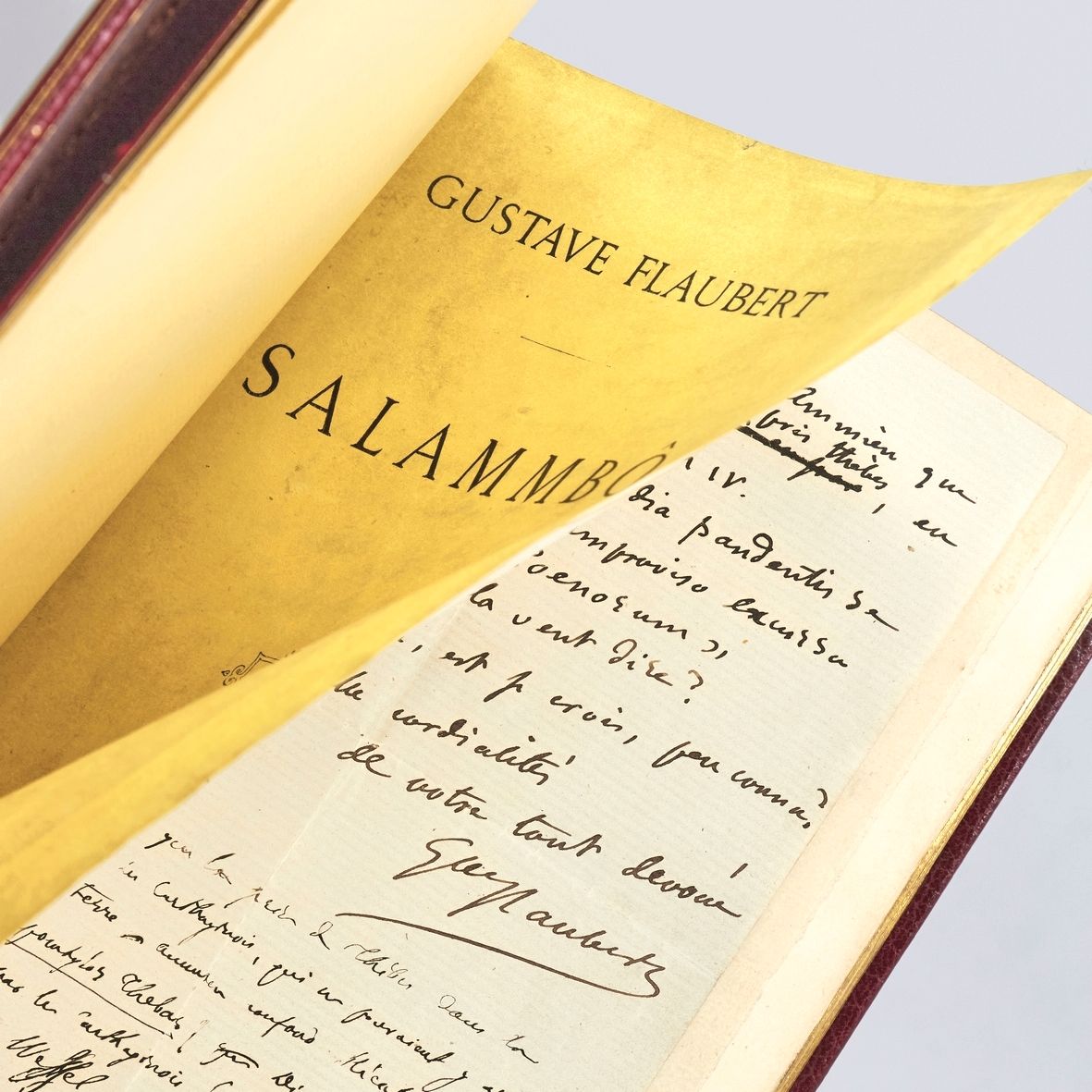
An inscribed copy refers a manuscript message left by the author on a copy of one of his works. It can be specifically addressed to a person connected to the author, i.e. a fellow writer, and can be either signed or unsigned.
An inscribed copy is to be distinguished from:
A printed dedication: Originally, a dedication was a text printed at the head of a work to honour a peer or patron to whom the author acknowledged influence or guidance in the creation of the work.
Bookshop dedications: author signatures made in bookshops during promotional tours are a modern invention and cannot be regarded on the same footing as an inscribed copy.
While a dedication is solicited by the reader, an inscribed copy is an offering from the author. Though both bear the author’s hand, an inscribed copy signals a particular closeness to the recipient and, when made on a review copy, grants them precedence before the book’s general release. Even in its briefest form, an inscribed copy carries meaning, reflecting the author’s choice to submit their work to the judgment of a specific reader - family, friend, critic, fellow writer, or artist. Explore the variety of authorial inscriptions in our article: Hoc Volumine continentur.
Ex-dono: also a handwritten testimony of a gift, an ex-dono is not necessarily made by the author and is therefore generally used to denote a mark of presentation by a third party. Sometimes intrusive and diminishing the bibliophilic value of the copy, an ex-dono can nevertheless constitute a precious historical mark if the donor or recipient played a role in the book’s history, or vice versa.
Ex-libris: a mark of ownership, either handwritten or printed on a personal bookplate. The term ex-libris literally means ‘this is my book.’ Once almost universal for centuries, it is now the preserve of bibliophiles… and children alike. The former commission artists to design finely illustrated bookplates bearing meaningful motifs and a personal motto; the latter simply write their name on the endpaper, topped - like readers of the sixteenth century - by a plain and earnest declaration: ‘this is my book!’
Marginalia: a term encompassing all handwritten interventions in the margins of a printed text, without distinction of origin - whether the author’s own corrections, a reader’s exegesis, an artist’s or amateur’s addenda, a bookseller’s notes, or the idle doodlings of some passer-by mistaking a life’s work for a notebook. Whether disfigurement or embellishment, marginalia sustains with the book a relationship at once passionate and absorbing. Discover it in our article Marginalia: ‘Where there is nothing…’- The Eloquence of the margins.
An inscribed copy, signed by the author and precious in itself, is sometimes further adorned with a drawing (Desnos), a collage (Prévert), a poem, a quotation from a third party (Cocteau to his mother), or even a profession of faith disguised as a citation (Proust). All these elements enhance the rarity and bibliophilic interest of the enriched copy. When the recipient is distinguished, when the inscription forms part of the writer’s own history or sheds new light on the work, such an exceptional autograph bears witness to a major event: the meeting of literature with History (see our selection: Exceptional Autographs). An inscribed copy possesses intrinsic value; yet it acquires greater bibliophilic significance when it appears in a first edition - offered by the author at the time of publication (or just before, in the case of a review copy) of the work’s initial release (see our article: What Is a First Edition?).
>> See all our inscribed copies in Literature field