



January 27, 2026
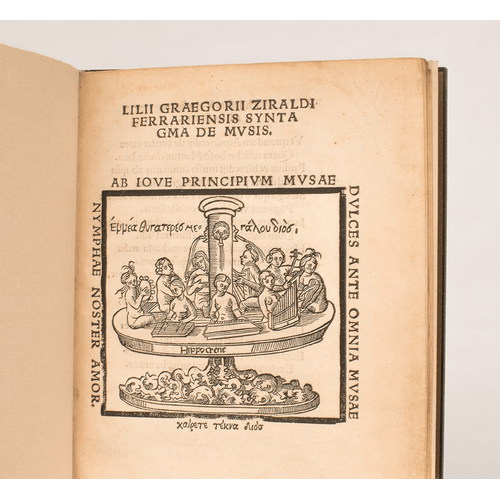
These dates are not arbitrary. The date of the invention of printing, although imprecise (between 1452, the date of Gutenberg's very first impressions of ephemera, and 1455, the release of his famous Bible known as the B42), marks the beginning of competition between the manuscript book (hand-copied by clerks), and mechanical printing using the movable type invented by Gutenberg.
The revolution was spectacular: a scribe hand wrote an average of three copies per year, while printing, from its very inception, made it possible to produce more than 150 copies (the print run of the Gutenberg Bible is estimated at between 158 and 180 copies) in just a few weeks (in reality, this first book took at least two years, but well, it was the beginning...). By 1500, the print run of an edition could reach 1,000 copies.
During these 50 years of printing, which first originated from a failed partnership between Johannes Gutenberg, Peter Schoeffer and Johann Fust, 29,000 texts were published and almost all of Europe would be conquered by the lightning-fast spread of this cutting-edge technology which offered access to all purses - well-filled ones - to ancient, medieval and sacred writings, but also to the modern and sometimes sacrilegious ideas of humanists, scientists, pamphleteers, and new religious orthodoxies. The first printed editions of texts previously circulating in manuscript form would be called "editiones princeps". New works first published by the printing press would henceforth be termed "original editions" or "first editions".
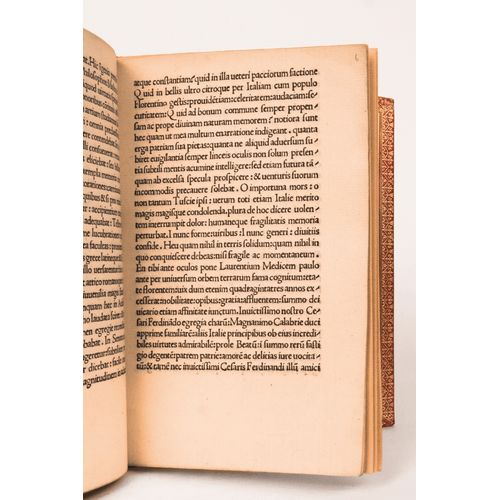
POST-INCUNABULA: THE END OF THE BEGINNING
At the beginning of the 16th century, a second revolution occurred which would mark the end of the book's infancy and its emancipation from the customs and rules established by 1,400 years of the codex (the book formed out of folded sheets assembled in gatherings, which replaced the rolled parchment volumen at the beginning of our era). From 1501 onwards, the book rapidly transformed to acquire its current composition:
From 1501 onwards, the book was no longer conceived as a simple mechanical transposition of the manuscript, but as a full-fledged vehicle of thought, responding to its own logic and unprecedented imperatives: new readership (in 50 years, more than 7.2 million books had been printed in Europe, representing as many new readers), unprecedented dissemination of new ideas (humanism, Protestantism, sciences...), commercial competition, state surveillance and above all the unbridled inventiveness of publisher-printers.
Of course, these developments were not simultaneous and it took a good additional half-century for the book to complete its transformation. Copies printed during the early years of the new century (1501-1530) are at least granted the designation of: post-incunabula.
See our selection "Incunabula and rare books from the 15th and early 16th century"


